Streamlining Creative Production with a Premium Butterfly Outline Laser Cut SVG Design
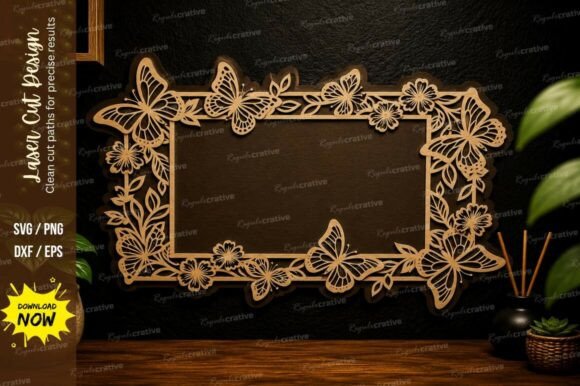
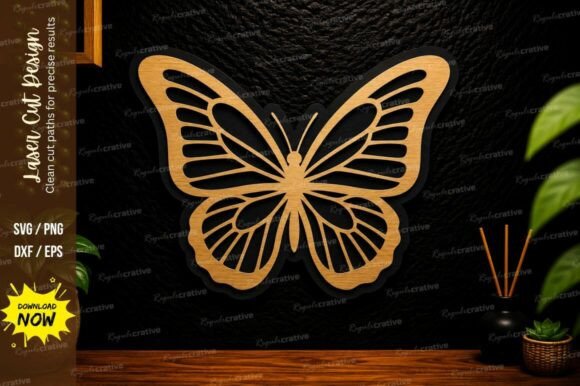
In the landscape of digital fabrication and modern crafting, the difference between a frustrating project and a seamless production run often comes down to the quality of the source file. For creators working with laser cutters, CNC routers, or vinyl plotters, starting with a Butterfly Outline Laser Cut SVG Design that is technically sound is not just a convenience; it is a foundational step in a reliable workflow. This specific type of asset serves as the bridge between a conceptual idea and a physical object, dictating the efficiency of the cutting process and the final aesthetic quality of the piece.
When integrating a premium design file set into your professional or hobbyist routine, the focus shifts from troubleshooting errors to executing vision. A high-quality vector package, prepared specifically for smooth and precise cutting, eliminates the need for time-consuming file repair. Instead of spending hours closing open paths, removing duplicate nodes, or adjusting stroke weights in software like Adobe Illustrator or CorelDRAW, you can move directly to material selection and machine setup. This shift in workflow is critical for small business owners and freelancers who bill by the hour or operate on tight deadlines.
The Role of Vector Integrity in Laser Cutting Workflows
The core value of a Butterfly Outline Laser Cut SVG Design lies in its vector integrity. Unlike raster images, which are made of pixels and lose clarity when resized, vector files use mathematical paths to define shapes. This ensures that whether you are creating a delicate jewelry pendant or a large-scale wall decoration, the outline remains crisp and the cut lines remain continuous. In a practical setting, this means the laser head follows a single, unbroken path, preventing burn marks caused by the machine stopping and starting at gaps in the design.
Premium quality files are characterized by clean geometry. They lack stray points, overlapping lines, and non-manifold edges that often plague free or low-quality downloads. When you download a package that includes formats like SVG, EPS, PNG, DXF, and PDF, you are equipping yourself with versatility. Each format serves a specific function within the broader ecosystem of design and manufacturing:
- SVG (Scalable Vector Graphics): The industry standard for web-based design software and many laser control programs. It preserves editability and scales infinitely.
- DXF (Drawing Exchange Format): Essential for compatibility with CAD software and older industrial CNC machines that may not read SVG natively.
- EPS (Encapsulated PostScript): Preferred by professional graphic designers using Adobe suites for high-end print and cut applications.
- PDF (Portable Document Format): Useful for quick previews, client approvals, or sending to shops that require universal file types.
- PNG (Portable Network Graphics): While not a cut file, a high-resolution PNG included in the set is vital for marketing materials, social media previews, and visual mockups before the physical cut begins.
Understanding where these files fit into your process allows for better organization. A disciplined creator will archive the original download in a "Source Assets" folder, then create a "Production Ready" sub-folder where files are renamed according to the specific job, material thickness, and machine settings. This habit prevents version control issues and ensures that if a file needs to be re-cut months later, the original pristine data is available.
Material Compatibility and Application Scenarios
The utility of a butterfly outline extends far beyond a single material. Because the design is a clean vector, it interacts predictably with various substrates. For woodworkers, this design is ideal for layered plywood projects, where multiple copies of the outline are stacked to create 3D depth. The precision of the cut ensures that layers align perfectly without visible gaps. For acrylic enthusiasts, the same file can be used to create intricate fretwork or standalone decorative pieces. The smoothness of the vector path is particularly important here, as acrylic shows every imperfection in the cut edge.
In the realm of paper crafts and cardmaking, the Butterfly Outline Laser Cut SVG Design enables the creation of complex pop-up elements or delicate invitations. Here, the power settings of the laser must be dialed down significantly, but the path accuracy remains paramount. Even in metal marking or engraving workflows, where the laser acts more as a pen than a cutter, the vector definition determines the sharpness of the etched line.
For educators and workshop leaders, having a ready-to-use file set simplifies lesson planning. Instead of teaching students how to trace and vectorize an image—a skill that takes time to master—you can provide the pre-validated file. This allows the class to focus on the mechanics of the machine, material safety, and finishing techniques. It democratizes the creation process, allowing beginners to achieve professional results immediately while they learn the underlying principles of digital fabrication.
Integration with Design Software and Machine Settings
Implementing these files into your daily operations requires an understanding of how different software interprets vector data. When importing the SVG or DXF into your preferred interface, such as LightBurn, RuidaControl, or Illustrator, the first step is always a visual inspection. Check for closed paths and ensure that the scale matches your intended output. One of the significant advantages of a premium file set is the ability to resize without losing quality. You can scale the butterfly from two inches to two feet, and the curve integrity will hold, provided your machine's resolution and lens focal length can support the detail level.
During the setup phase, color mapping becomes a crucial part of the workflow. In laser software, different colors often correspond to different operations (e.g., red for cutting, blue for engraving). Since a butterfly outline is typically a single-path cut, assigning it a distinct color layer helps in managing power and speed settings independently from other elements in a larger composition. If you are combining the butterfly with text or background patterns, the clean separation of the vector layers ensures that the cutting order is logical—usually cutting internal details first and external outlines last to prevent the material from shifting prematurely.
Efficiency is also gained through the consistency of the file. If you are running a batch production for a market stall or an online store, knowing that every file in the set behaves identically reduces the risk of wasted material. There is no need to adjust parameters for each individual piece; once the optimal settings for the butterfly outline are determined for a specific material (e.g., 3mm birch plywood at 80% power and 20mm/s speed), those settings can be saved as a preset and applied universally across the batch.
Long-Term Value and Business Scalability
For entrepreneurs and small business owners, the acquisition of high-quality assets is an investment in scalability. A Premium quality laser cutting design file set pays for itself by reducing labor hours spent on file preparation. As your business grows, the ability to quickly deploy proven designs allows you to respond faster to market trends. If a butterfly motif becomes popular for a seasonal campaign, having the files ready in multiple formats means you can instantly adapt the design for different machines or client requirements without delay.
Furthermore, the professional finish achieved by using clean vectors enhances brand reputation. Clients notice the difference between a jagged, poorly cut edge and a smooth, polished line. This attention to detail builds trust and encourages repeat business. Whether you are creating custom wedding favors, architectural models, or personalized home decor, the underlying quality of the Butterfly Outline Laser Cut SVG Design directly influences the perceived value of the final product.
In conclusion, integrating a well-prepared vector file set into your workflow is a strategic move that enhances precision, saves time, and expands creative possibilities. By choosing files that offer broad compatibility and technical cleanliness, you remove friction from the production process. This allows you to focus on what truly matters: innovation, craftsmanship, and delivering exceptional results to your audience. The transition from digital file to physical object should be fluid, and with the right assets, it becomes a reliable engine for your creative enterprise.